 HỆ THỐNG LUẬT NGUYỄN - DỊCH VỤ LUẬT - TÀI CHÍNH KẾ TOÁN - THUẾ



Exposing the “Underground Production” of SJC Gold Bars
SJC – Vietnam’s national gold brand
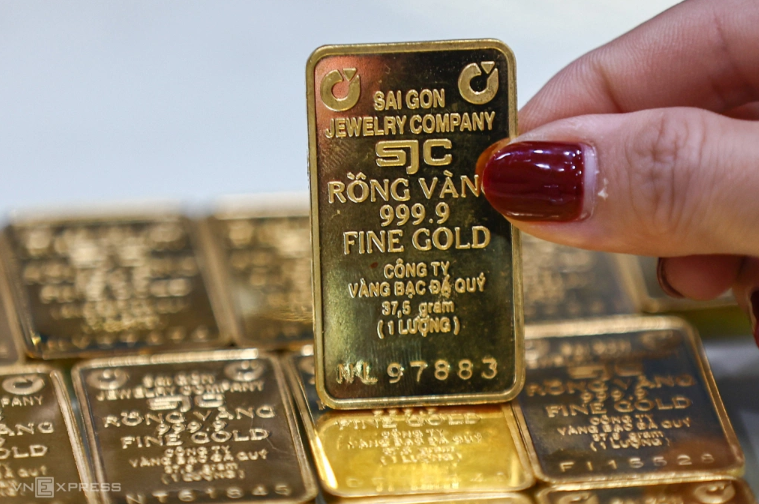
SJC, wholly owned by the Ho Chi Minh City People’s Committee, is tasked with producing and trading gold bars, rings, and precious metal products. Since 2012, the State Bank of Vietnam designated SJC as the sole national brand for gold bars, requiring that every step of production be monitored through surveillance cameras and on-site inspectors.
By regulation, each production batch must be pre-approved for volume and timing. However, SJC executives exploited loopholes in this system to carry out illegal “off-the-books” production for profit.
A carefully staged operation
Investigators allege that Hang conspired with Tran Tan Phat, deputy director of the Tan Thuan gold workshop, to secretly insert raw gold purchased on the open market into authorized batches of reprocessed “defective” gold bars.
The scheme was executed in a calculated manner:
-
Raw gold was pre-smelted into ingots and hidden inside the workshop.
-
When inspectors were present, workers deliberately botched the pouring process, forcing a “redo.” At this stage, the smuggled gold was swapped into the workflow.
-
For serial numbers, the team relied on a backup stamping machine, using unused serial ranges to disguise the illicit bars as genuine SJC products.
Between August 2022 and February 2024, the group carried out this ruse 56 times, illegally releasing 6,255 taels of SJC gold bars into the market. The scheme caused an estimated state budget loss of VND 74.8 billion (about USD 3 million). Hang personally pocketed more than VND 64 billion, while her accomplices shared billions more.
Expanding to SJC gold rings
From mid-2023 to September 2024, Hang also directed Nguyen Thi Hue and others to purchase raw gold and produce 46,285 SJC gold rings and jewelry pieces—equivalent to 11,503 taels of gold.
These products were sold to customers in Hai Phong, generating revenues exceeding VND 91 billion. After deducting costs, Hang and Hue split profits of around VND 13.2 billion.
Separately, Phat accepted raw gold from private businesses for unauthorized processing of SJC rings, pocketing more than VND 300 million in service fees.
Oversight loopholes exposed
Under a 2012 State Bank regulation, SJC was allowed to produce gold bars only when deemed necessary for market regulation or monetary policy. All dies and molds had to be sealed, and every batch was subject to close supervision.
Yet the investigation revealed that these safeguards were systematically manipulated, enabling senior executives and workshop staff to run a parallel production line for years. The scandal has inflicted major financial damage and tarnished the credibility of Vietnam’s national gold brand.
Ý kiến bạn đọc
Những tin mới hơn
Những tin cũ hơn
Luật sư Nguyễn Tuấn Hải – Luật sư giàu kinh nghiệm tại Lâm Đồng, thành viên đội ngũ Luật Nguyễn Group
Luật sư Nguyễn Tuấn Hải – Luật sư giàu kinh nghiệm tại Lâm Đồng, thành viên đội ngũ Luật Nguyễn Group Hành trình nghề nghiệp của Luật sư Nguyễn Tuấn Hải Luật sư Nguyễn Tuấn Hải chính thức trở thành thành viên của Đoàn Luật sư tỉnh Lâm Đồng từ năm 2013. Từ những ngày đầu đến nay, anh đã tham...


-
 Nghị định 308/2026/NĐ-CP: Đòn bẩy mới nâng tầm chất lượng nhân lực doanh nghiệp
-
 Con đã tốt nghiệp chưa có việc làm: Có được giảm trừ gia cảnh không?
-
 Đãi ngộ xứng tầm cho người có uy tín từ 20/09/2026
-
 Nghị định 306/2026/NĐ-CP: Nâng tầm vị thế và tổ chức Bộ Ngoại giao
-
 Nghị định 304: Đột phá chính sách huy động nhân lực cho CAND
- Đang truy cập583
- Máy chủ tìm kiếm7
- Khách viếng thăm576
- Hôm nay47,956
- Tháng hiện tại1,597,824
- Tổng lượt truy cập26,914,452
-
 Luật Thuế GTGT 1/1/2026: Bước Ngoặt Cho Hộ Kinh Doanh Và Nông Nghiệp
-
 Gold price gap between SJC and global market narrows by VND 6 million
-
 Khởi tố Đoàn Văn Sáng vì tội giết người ở Lạng Sơn
-
 Bảng Tỷ Lệ Thuế Suất Theo Thông Tư 40/2021/TT-BTC
-
 Quỹ Phòng chống thiên tai đối với Doanh nghiệp.Bắt buộc hay Tự nguyện?