 HỆ THỐNG LUẬT NGUYỄN - DỊCH VỤ LUẬT - TÀI CHÍNH KẾ TOÁN - THUẾ


Differences Between Visa and Temporary Residence Card in Vietnam
Definition and Purpose
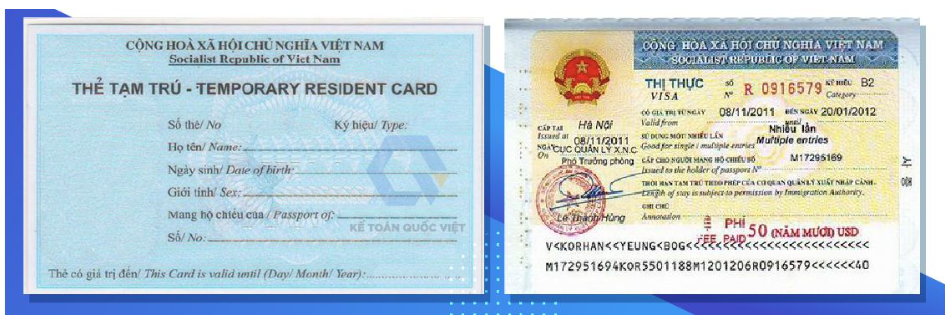
A visa is an entry permit issued by the Vietnamese authorities to foreigners who wish to enter Vietnam for various purposes such as tourism, business, study, work, or visiting relatives. It is generally valid for a short period, from a few days up to 12 months depending on the visa type.
Meanwhile, a temporary residence card (TRC) is a document issued by the immigration authorities to foreigners who intend to reside in Vietnam for a longer period. The TRC can be valid from one to ten years depending on the applicant’s status, and it allows multiple entries without the need to apply for a new visa each time.
Validity Period
Visas usually come with shorter validity. Common visa categories include one-month, three-month, six-month, or twelve-month options. They can be single-entry or multiple-entry, but once expired, the holder must leave the country or extend the visa.
In contrast, temporary residence cards offer a longer duration. For example, investors with sufficient capital may obtain a TRC valid up to ten years, while foreign employees, lawyers, or dependents often receive cards valid for one to three years.
Rights and Benefits
A key distinction lies in the level of convenience. A visa only grants permission to enter and stay temporarily, and holders must apply for extensions or new visas to remain longer.
A TRC, however, acts like a long-term residence permit. Holders can freely enter and exit Vietnam without needing a visa during the card’s validity period. This not only saves time and costs but also facilitates stability for foreigners working and living in Vietnam.
Applicable Cases
Visas apply broadly to tourists, short-term business travelers, and those entering Vietnam for limited purposes.
Temporary residence cards, on the other hand, are reserved for specific groups such as:
-
Foreign investors in Vietnamese companies.
-
Foreigners employed under valid work permits or work permit exemptions.
-
Lawyers licensed to practice in Vietnam.
-
Dependents of foreigners holding TRCs (spouses, children, or parents).
Application Requirements
To obtain a visa, foreigners usually need a passport valid for at least six months, visa application forms, and in some cases, an invitation or sponsorship from a Vietnamese organization or individual.
For a temporary residence card, more extensive documentation is required: proof of purpose of stay, legal residence in Vietnam, valid work permits or exemption certificates (for employees), or investment certificates (for investors). The sponsoring organization in Vietnam is typically responsible for submitting the application to immigration authorities.
Conclusion
While both visas and temporary residence cards are legal documents that regulate the stay of foreigners in Vietnam, they differ significantly in validity, function, and convenience. A visa is suitable for short-term stays, while a temporary residence card offers a long-term solution, providing greater stability and flexibility for foreigners who plan to work, invest, or settle in Vietnam.
Ý kiến bạn đọc
Những tin mới hơn
Những tin cũ hơn
Luật sư Nguyễn Thị Hồng Nga - Hành trình cống hiến và trưởng thành cùng Luật Nguyễn
Trong đội ngũ luật sư kỳ cựu của Luật Nguyễn, có những người đã gắn bó từ thuở mới chập chững vào nghề, mang theo bầu nhiệt huyết của tuổi trẻ và khát khao cống hiến. Luật sư Nguyễn Thị Hồng Nga là một trong số đó. Từ một cô sinh viên luật thực tập cho đến một luật sư chính thức, chị đã có hơn...


-
 Cách ký số điện tử trên file pdf bằng usb token
-
 Thủ tục xin giấy chứng nhận lưu hành sản phẩm đối với hàng hoá nhập khẩu
-
 Thủ tục xin giấy chứng nhận lưu hành sản phẩm đối với hàng hoá xuất khẩu
-
 Những nhóm được miễn thuế TNCN từ 01/7/2026 bạn nên biết
-
 Thủ tục xin giấy phép kinh doanh vận tải bằng ô tô 2026

- Đang truy cập272
- Hôm nay11,209
- Tháng hiện tại66,943
- Tổng lượt truy cập17,308,718